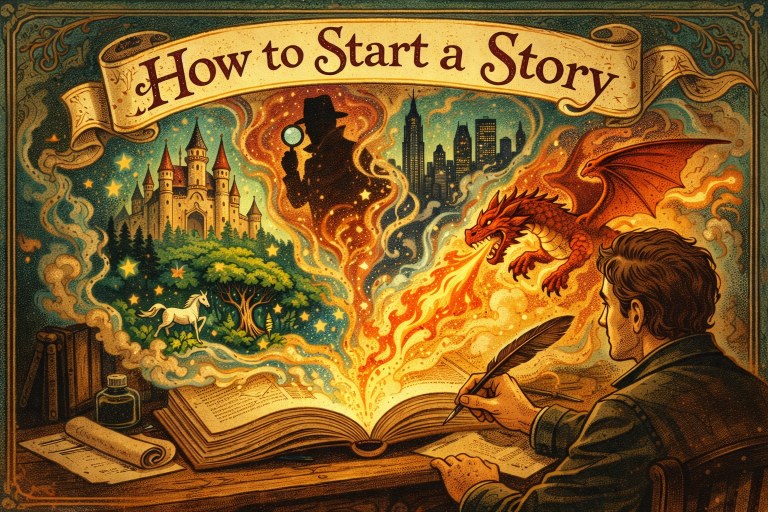

To start a story well, give the reader a reason to care within the first few sentences. Strong openings drop the reader into action, a clear question, or a striking character detail – not long background or weather reports.
Why the Opening Matters
Readers decide quickly whether to keep going, so clarity and interest matter more than perfect elegance at the beginning. A weak opening loses readers before the story has a chance; a strong one makes the rest of the writing easier to shape.
Opening Techniques That Hook Readers
- Start in the middle of action. Open on a small conflict or a moment of movement rather than backstory.
- Raise a question. Give the reader something they want answered.
- Lead with a vivid detail. One sharp, specific image beats a paragraph of general description.
- Use dialogue. A striking line of speech drops the reader straight into a scene.
This classic technique even has a name – in medias res, Latin for “into the middle of things.”
The Same Trick Works for Essays
When you are figuring out how to start an essay, lead with a specific claim, a surprising fact, or a short scene that illustrates your point. The principle is identical: earn the reader’s attention first, explain later.
Write the Opening Last – or Rewrite It
Many writers draft the opening last, or rewrite it after the rest of the story exists. That way the first pages can properly set up what actually happens later, instead of guessing at a beginning before the story is known.
Connect the Opening to the Ending
A good opening makes the ending stronger. If you know how to start a conclusion that feels earned, it usually connects back to the question or image you raised at the start. You do not need a dramatic first line every time – you need one that fits the tone and makes the reader want the next sentence.
Frequently Asked Questions
How do I start a story?
Give the reader a reason to care in the first sentences: start with action, a question, a vivid detail or dialogue rather than background.
Should I start my story with description?
Long descriptive openings usually lose readers. A short, specific image works; pages of scene-setting do not.
What makes a good first line?
One that fits the tone of the piece and makes the reader want the next sentence – it does not have to be dramatic.
When should I write the opening?
Many writers draft it last or rewrite it after the story exists, so it properly sets up what actually happens.
How do I start an essay effectively?
Lead with a specific claim, a surprising fact, or a short scene that illustrates your point.








Leave a Reply