
If you earn $30 per hour, you may want to know what that equals as an annual salary. Converting an hourly wage to yearly pay helps with budgeting, job comparisons, and financial planning. The exact amount depends on how many hours you work each week and how many weeks you work per year.
This guide provides clear calculations for $30 per hour, different work schedules, and factors that affect your real take-home pay.
Quick answer: $30 an hour is $62,400 a year before tax, based on 40 hours a week for 52 weeks (2,080 paid hours). That works out to about $5,200 a month, $2,400 every two weeks, $1,200 a week and $240 for an eight-hour day.
Basic Calculation: $30 Per Hour to Annual Salary
The standard full-time calculation uses 40 hours per week and 52 weeks per year:
$30 x 40 hours x 52 weeks = $62,400 per year
This is the most common figure used when converting a $30 hourly rate into an annual salary.
Salary by Different Work Schedules
| Hours per Week | Weeks per Year | Annual Pay at $30/hr |
|---|---|---|
| 40 | 52 | $62,400 |
| 40 | 50 | $60,000 |
| 35 | 52 | $54,600 |
| 30 | 52 | $46,800 |
| 20 | 52 | $31,200 |
These amounts are gross pay before taxes and deductions.
Monthly and Weekly Breakdown
For a standard full-time schedule ($62,400 per year):
- Monthly: approximately $5,200
- Biweekly: approximately $2,400
- Weekly: $1,200
Factors That Reduce Take-Home Pay
The $62,400 figure is gross income. Actual take-home pay is lower after:
- Federal income tax
- State income tax (if applicable)
- Social Security and Medicare
- Health insurance premiums
- Retirement contributions
- Other payroll deductions
Overtime Impact
Overtime can increase annual earnings. At time-and-a-half, overtime pay would be $45 per hour. Consistent overtime can raise total yearly income well above the base $62,400.
Full-Time vs Part-Time at $30 Per Hour
Full-time work at $30 per hour generally provides higher total earnings and a greater chance of benefits. Part-time schedules offer more flexibility but lower annual income.
How $30 Per Hour Compares
$30 per hour equals $62,400 per year at full-time hours. This is above the national average wage in many areas and provides a solid income depending on location and cost of living. The same salary can feel very different in high-cost versus low-cost cities.
$30 an Hour: Every Pay Period at a Glance
Based on a standard full-time schedule of 40 hours a week and 52 paid weeks a year:
| Pay period | Calculation | Gross pay |
|---|---|---|
| Per hour | Base rate | $30 |
| Per day (8 hours) | $30 x 8 | $240 |
| Per week (40 hours) | $30 x 40 | $1,200 |
| Every two weeks (biweekly) | $1,200 x 2 | $2,400 |
| Twice a month (semi-monthly) | $62,400 / 24 | $2,600 |
| Per month | $62,400 / 12 | $5,200 |
| Per year | $30 x 2,080 | $62,400 |
Note that biweekly and semi-monthly pay are not the same. Biweekly pay gives 26 paychecks a year, while semi-monthly pay gives 24 slightly larger paychecks.
Step-by-Step: How to Convert Any Hourly Rate to a Yearly Salary
- Write down your hourly rate. For example, $30.
- Multiply by your weekly hours. $30 x 40 = $1,200 a week.
- Multiply by the number of paid weeks. $1,200 x 52 = $62,400 a year.
- Adjust for unpaid time off. If you take two unpaid weeks, use 50 weeks instead: $1,200 x 50 = $60,000.
- Add regular overtime separately at the overtime rate.
A quick shortcut for a 40-hour week is to double the hourly rate and add three zeros: $30 becomes about $60,000. The exact figure is slightly higher because a year has 52 weeks, not 50.
Does Paid Time Off Change the Total?
If your employer provides paid holidays and paid vacation, your annual gross pay stays at $62,400, because you are paid for those days even though you do not work them. If time off is unpaid, which is common for some hourly jobs, subtract it:
| Unpaid time off | Paid weeks | Annual pay at $30/hr |
|---|---|---|
| None | 52 | $62,400 |
| 1 week | 51 | $61,200 |
| 2 weeks | 50 | $60,000 |
| 3 weeks | 49 | $58,800 |
| 4 weeks | 48 | $57,600 |
Each unpaid week at 40 hours reduces your yearly income by $1,200.
How Overtime Changes $30 an Hour
Under the US Fair Labor Standards Act, non-exempt employees must generally receive at least one and a half times their regular rate for hours worked over 40 in a workweek. At $30 an hour, that overtime rate is $45.
| Regular overtime per week | Extra per year | Total yearly pay |
|---|---|---|
| 0 hours | $0 | $62,400 |
| 2 hours | $4,680 | $67,080 |
| 5 hours | $11,700 | $74,100 |
| 10 hours | $23,400 | $85,800 |
Some states have additional overtime rules, such as daily overtime limits, so check the rules where you work.
What a Raise Means at $30 an Hour
On a full-time schedule, every extra dollar per hour adds $2,080 to your yearly gross pay:
| Hourly rate | Yearly salary (2,080 hours) |
|---|---|
| $30 | $62,400 |
| $31 | $64,480 |
| $32 | $66,560 |
| $33 | $68,640 |
| $35 | $72,800 |
This is useful when negotiating. A raise from $30 to $32 an hour may sound small, but it is worth $4,160 a year before tax.
$30 an Hour as an Employee vs a Contractor
An employee earning $30 an hour and a self-employed contractor charging $30 an hour do not end up with the same income:
- Employees usually have income tax, Social Security and Medicare withheld by the employer, and the employer pays its own share of payroll taxes. Benefits such as health insurance or retirement matching may be added on top.
- Contractors pay self-employment tax, which covers both the employee and employer shares of Social Security and Medicare, currently 15.3% on net earnings up to the Social Security wage limit. They also pay for their own insurance, equipment and unpaid time off.
As a result, many contractors charge a higher hourly rate than an equivalent employee salary to cover these costs.
Is $30 an Hour Enough to Live On?
Whether $62,400 a year is comfortable depends on several factors:
- Location: Housing costs vary enormously between cities, suburbs and rural areas.
- Household size: A single person and a family of four have very different budgets.
- Debt: Student loans, car payments and credit card balances reduce disposable income.
- Benefits: Employer-paid health insurance and retirement contributions are worth thousands of dollars a year.
- Second income: In a household with two people each earning $30 an hour full time, gross income would be $124,800.
A practical test is to build a monthly budget using your expected take-home pay rather than the $5,200 gross figure.
Simple Budget Framework for $30 an Hour
One popular guideline is the 50/30/20 rule, which suggests dividing take-home pay into roughly:
- 50% for needs: rent or mortgage, utilities, groceries, insurance and minimum debt payments
- 30% for wants: eating out, entertainment, travel and hobbies
- 20% for savings and extra debt payments: emergency fund, retirement and paying down loans
Use your actual net pay after taxes and deductions when applying the rule.
$30 an Hour in Other Countries
The same hourly figure gives different annual totals where standard working weeks differ. In the UK, for example, many full-time contracts are based on 37.5 hours a week:
- 30 GBP x 37.5 hours x 52 weeks = 58,500 GBP a year
- 58,500 GBP / 12 = 4,875 GBP a month before tax
Always use the weekly hours in your own contract for an accurate figure.
Key Takeaways
- $30 per hour equals $62,400 per year at 40 hours per week and 52 weeks per year.
- Actual annual pay changes with hours worked and weeks worked.
- Taxes and deductions reduce take-home pay below the gross amount.
- Overtime can significantly increase yearly earnings.
- Location and cost of living affect how far the salary goes.
- Each extra dollar per hour adds $2,080 a year on a full-time schedule.
- Paid time off does not reduce the $62,400 total, but each unpaid week costs $1,200.
Frequently Asked Questions
Is $30 an hour a good wage?
It depends on your location and expenses. In many areas it provides a comfortable income for a single person, but cost of living varies widely.
How much is $30 an hour after taxes?
Take-home pay varies by state, filing status, and deductions. A rough estimate for a single filer is often between $48,000 and $52,000 net annually.
How do I calculate any hourly wage to yearly salary?
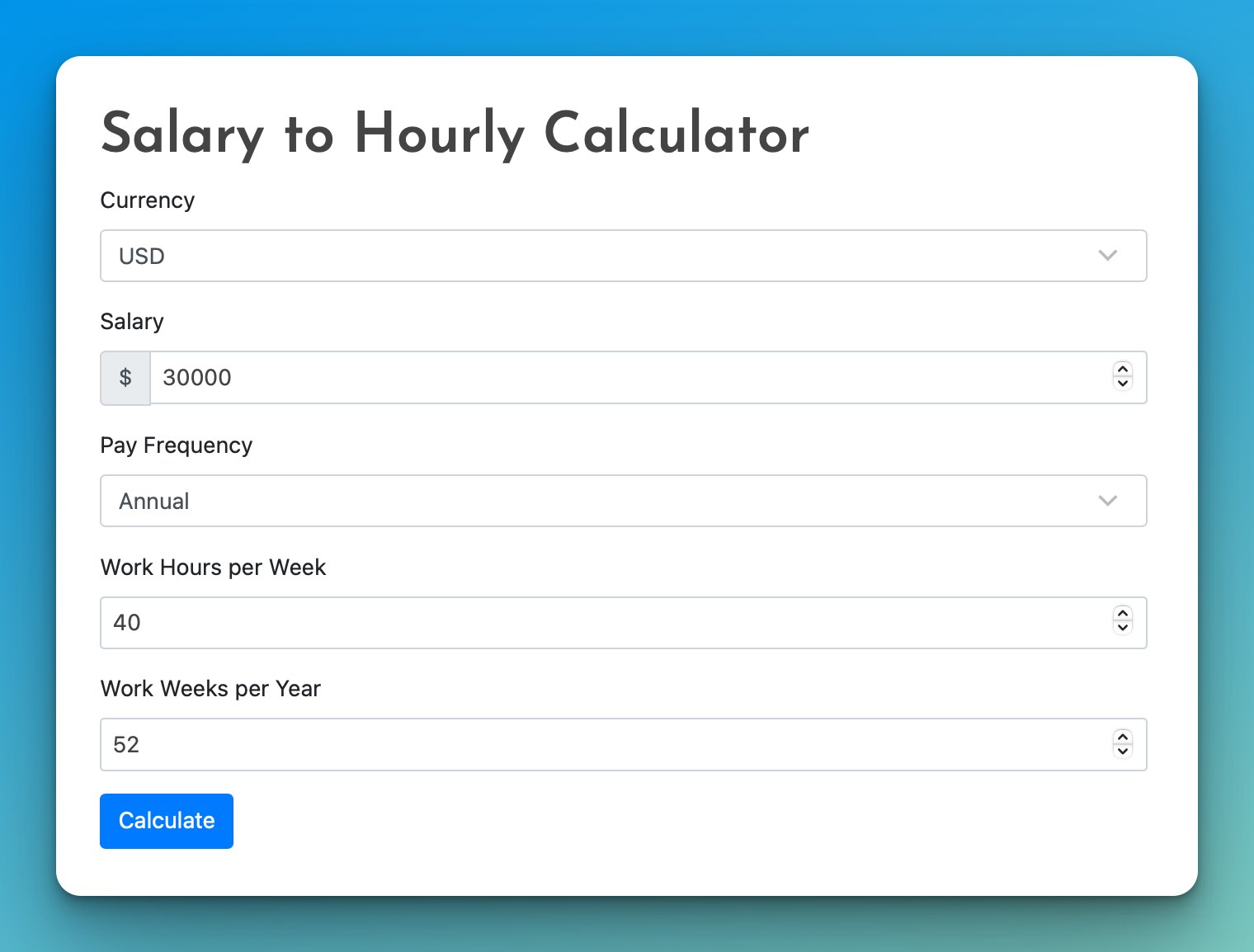
Multiply the hourly rate by weekly hours, then multiply by the number of weeks worked per year.
Does $62,400 include benefits?
No. The figure is gross pay only. Benefits such as health insurance or retirement matching are separate.
How much is $30 an hour per month?
At 40 hours a week for 52 weeks, $30 an hour equals $62,400 a year, which divided by 12 is $5,200 a month before tax. If you are paid biweekly, you receive 26 paychecks of $2,400, so two months each year include a third paycheck.
What is $30 an hour for 37.5 hours a week?
At 37.5 hours a week for 52 weeks, you work 1,950 hours a year. Multiplied by $30, that equals $58,500 a year before tax, or $4,875 a month. This schedule is common in the UK and in some office roles elsewhere.
How much is $30 an hour with overtime?
Overtime at time and a half is $45 an hour. If you work five overtime hours every week of the year, you earn an extra $11,700, bringing total gross pay to $74,100. Ten overtime hours a week would add $23,400, for a total of $85,800.
Is $62,400 a year a good salary?
It can be a solid income, particularly for a single person in an area with moderate living costs. In high-cost cities, housing may take a large share of it. Compare it with local rents, typical living expenses and the benefits package before deciding whether it meets your needs.






Leave a Reply