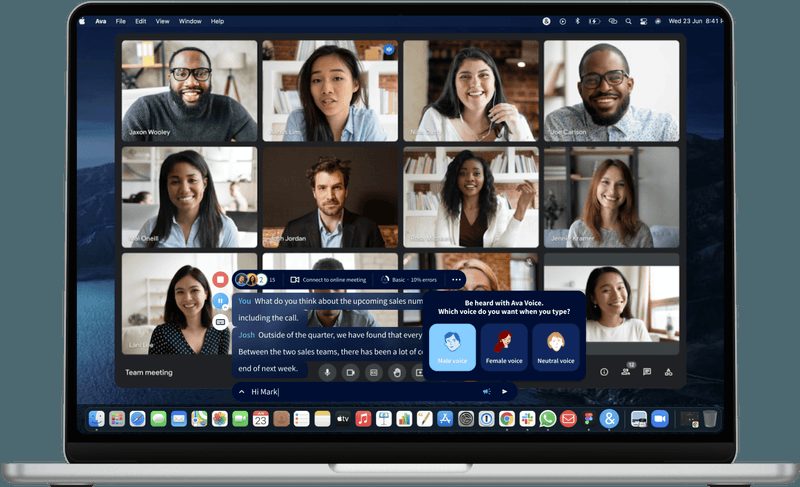

Meeting transcription turns spoken discussions from online or in-person meetings into written text. Accurate meeting transcripts help teams keep records, share decisions, and review action items without relying only on memory or rough notes.
This guide explains the best ways to transcribe meetings, recommended tools, and practical steps for clear and useful results. It focuses on the main keyword 会議 文字起こし and related meeting documentation needs.
Quick answer: To transcribe a meeting, use the transcription built into your video platform (Zoom, Microsoft Teams or Google Meet, depending on your plan), an AI meeting assistant, or record the meeting and upload the audio to a transcription tool. Tell participants first, make sure everyone has good audio, then review the transcript and turn it into clear notes with decisions and action items.
Why Transcribe Meetings?
Transcribing meetings provides several benefits:
- Creates a searchable written record
- Helps team members who missed the meeting
- Clarifies decisions and action items
- Supports project documentation
- Reduces misunderstandings
- Saves time compared with manual note-taking
Good meeting transcription is especially valuable for remote and hybrid teams.
Best Methods for Meeting Transcription
- AI Meeting Assistants
Tools that join online meetings automatically and generate transcripts in real time or afterward.
- Recording + Transcription Tools
Record the meeting first, then upload the audio to a transcription service.
- Built-in Platform Features
Some video conferencing tools offer native transcription or captioning.
- Manual Transcription
Typing notes during or after the meeting. This is slower but useful for highly sensitive discussions.
Step-by-Step: Transcribe an Online Meeting
- Inform participants if recording or transcription will be used.
- Start the meeting recording or enable the transcription tool.
- Ensure good audio quality for all speakers.
- Conduct the meeting normally.
- End the recording and process the transcript.
- Review and correct the text.
- Share the cleaned transcript with relevant team members.
- Highlight action items and decisions.

Tips for Clear Meeting Transcription
- Use headsets or good microphones
- Minimise background noise
- Ask participants to speak one at a time when possible
- State names before important points if speaker identification is needed
- Test your transcription tool before important meetings
- Edit technical terms, names, and acronyms afterward
- Store transcripts in an organised shared folder
Choosing the Right Meeting Transcription Tool
Look for these features:
- High accuracy with multiple speakers
- Automatic speaker labels
- Fast processing
- Easy editing
- Integration with your meeting platform
- Secure data handling
- Export options (DOCX, PDF, TXT)
Common Challenges in Meeting Transcription
Overlapping speech
Accuracy drops when people talk at the same time. Encourage turn-taking.
Poor audio
Background noise or weak microphones reduce quality. Improve setup when possible.
Accents and technical language
May require more manual correction. Choose tools that perform well with your team’s speech patterns.
Privacy concerns
Confirm that the tool meets your organisation’s data security requirements.
Built-in Transcription on Popular Meeting Platforms
| Platform | Where to find it | Where the transcript goes | Notes |
|---|---|---|---|
| Microsoft Teams | More actions in the meeting controls, then record and transcribe options | Available in the meeting chat and recap | Depends on licence and organisation policies |
| Zoom | Captions and transcript options in meeting controls; audio transcripts for cloud recordings | Meeting window or cloud recording page | Some features require paid plans or admin settings |
| Google Meet | Activities, then Transcripts | Google Doc in the organiser's Drive | Available on eligible Google Workspace editions |
Menu names change between versions. If you cannot find an option, your plan or administrator settings may not include it.
Live Captions vs Transcripts vs AI Notes
- Live captions show words on screen during the meeting. They help accessibility and understanding but may not be saved.
- Transcripts are a saved written record of what was said, usually with speaker names and timestamps.
- AI notes and summaries condense the meeting into key points, decisions and action items. They are quicker to read but can miss nuance, so keep the full transcript if accuracy matters.
Transcribing In-Person and Hybrid Meetings
In-person meetings bring extra challenges: people sit at different distances from the microphone and often talk over one another.
- Use a conference microphone or speakerphone placed in the middle of the table, rather than a laptop at one end.
- For hybrid meetings, make sure room participants are captured clearly by the meeting platform, so remote attendees and the transcript both hear them.
- Record on a phone as a backup, placed centrally on a soft surface to reduce vibration noise.
- Ask people in the room to say their name before speaking at the start, which helps you assign speakers later.
How to Tell Participants About Transcription
Consent and transparency matter for trust and, in many places, legal compliance. A simple opening script:
"Before we start, I'd like to record and transcribe this meeting so we have accurate notes. The transcript will be shared only with attendees and deleted after [period]. Is everyone comfortable with that?"
Give people a chance to object, and pause recording for confidential items if needed.
Turning a Transcript into Useful Meeting Notes
Few people want to read a full transcript. Convert it into notes using this template:

Meeting: title, date, attendees
Purpose: one sentence
Key discussion points: three to six bullets
Decisions: what was agreed
Action items: task, owner, deadline
Open questions: items needing follow-up
Next meeting: date and agenda topics
An AI assistant can draft this from a transcript with a prompt such as: "Turn this transcript into meeting notes using these headings. List action items with owners and deadlines. Do not invent information not in the transcript."
Choosing Between a Bot and Built-in Features
| Factor | Built-in platform transcription | AI meeting assistant bot |
|---|---|---|
| Setup | Already available on eligible plans | Requires an account and calendar connection |
| Works across platforms | Usually only that platform | Often supports several platforms |
| Summaries and action items | Increasingly included | A core feature |
| Participant comfort | Familiar and expected | A bot joining the call can surprise people |
| Admin control | Managed by your IT team | May need IT approval |
Accessibility Benefits
Transcripts and captions help:
- Deaf and hard of hearing colleagues
- People working in a second language
- Colleagues who process written information more easily than spoken
- Anyone who missed the meeting or wants to check a detail later
Making transcripts available by default can make meetings more inclusive.
Security and Data Protection
Meeting transcripts often contain confidential information, personal data and commercial plans:
- Store transcripts in approved company systems, not personal accounts.
- Limit access to attendees and people with a clear need.
- Set a retention period and delete old transcripts.
- Check whether third-party assistants store data, use it for training or process it outside your region.
- Pause transcription for sensitive HR, legal or personal discussions.
Meeting Transcription Best Practice Checklist
- Participants informed before recording starts
- Good microphones and a quiet environment
- One person speaking at a time
- Speaker names checked and corrected
- Names, numbers and decisions proofread
- Notes with action items shared within a day
- Transcript stored securely and deleted on schedule
Example: A Weekly Team Meeting Workflow
- The organiser enables transcription in the calendar invite or at the start of the call and reads the consent script.
- Each person joins with a headset, and the chair asks people to raise a hand before speaking.
- After the meeting, the organiser opens the transcript and fixes names, product terms and figures.
- An AI assistant drafts notes from the corrected transcript using the template above.
- The organiser checks the action items and shares the notes in the team channel within a day.
- The full transcript is kept in the team's approved folder for a set period, then deleted.
This process usually takes a few minutes and gives everyone a reliable record without anyone needing to take notes by hand during the meeting.
Common Mistakes in Meeting Transcription
- Starting transcription without telling participants
- Relying on laptop microphones in a large room
- Sharing raw transcripts instead of clear notes
- Accepting AI action items without checking owners and deadlines
- Keeping transcripts indefinitely in personal folders
Key Takeaways
- Meeting transcription (会議 文字起こし) creates reliable written records of discussions.
- AI tools make the process much faster than manual note-taking.
- Good audio quality and clear speaking improve results significantly.
- Always review and edit transcripts before sharing.
- Proper consent and data security should be considered.
- Teams, Zoom and Google Meet offer built-in transcription on eligible plans and settings.
- Turn transcripts into short notes with decisions, owners and deadlines, and store them securely.
Frequently Asked Questions
What is the easiest way to transcribe a meeting?
Using an AI meeting assistant or recording the meeting and uploading it to a transcription tool is the most efficient method.
Are meeting transcription tools accurate?
They are generally accurate with clear audio and limited overlap. Manual review is still recommended for important meetings.
Do I need to tell participants that the meeting is being transcribed?
Yes. Informing participants is both a best practice and a legal requirement in many places.
Can I transcribe in-person meetings?
Yes. Record the meeting with a good microphone or conference device, then use a transcription tool on the audio file.
Can Microsoft Teams transcribe meetings automatically?
Yes, Teams can transcribe meetings when transcription is enabled by your organisation and licence. Start it from the meeting controls, and attendees will be notified. After the meeting, the transcript is available in the meeting chat and recap, where you can review, search and download it, depending on your permissions.
How do I transcribe an in-person meeting?
Place a conference microphone or a phone in the centre of the table, ask participants for consent and record the meeting. Then upload the recording to a transcription tool, or use a recorder app with built-in transcription. Ask people to speak one at a time to improve speaker identification.
Are AI meeting summaries reliable?
AI summaries are useful for capturing main points quickly, but they can miss nuance, misattribute comments or occasionally include errors. Review the summary against the transcript, especially decisions and action items, before sharing it. For important or sensitive meetings, keep the full transcript as the official record.
How long should I keep meeting transcripts?
Keep transcripts only as long as you need them, in line with your organisation's data retention policy and any legal requirements. Many teams keep the summary notes long term but delete full transcripts after a set period, which reduces privacy risk and storage of personal data.









Leave a Reply