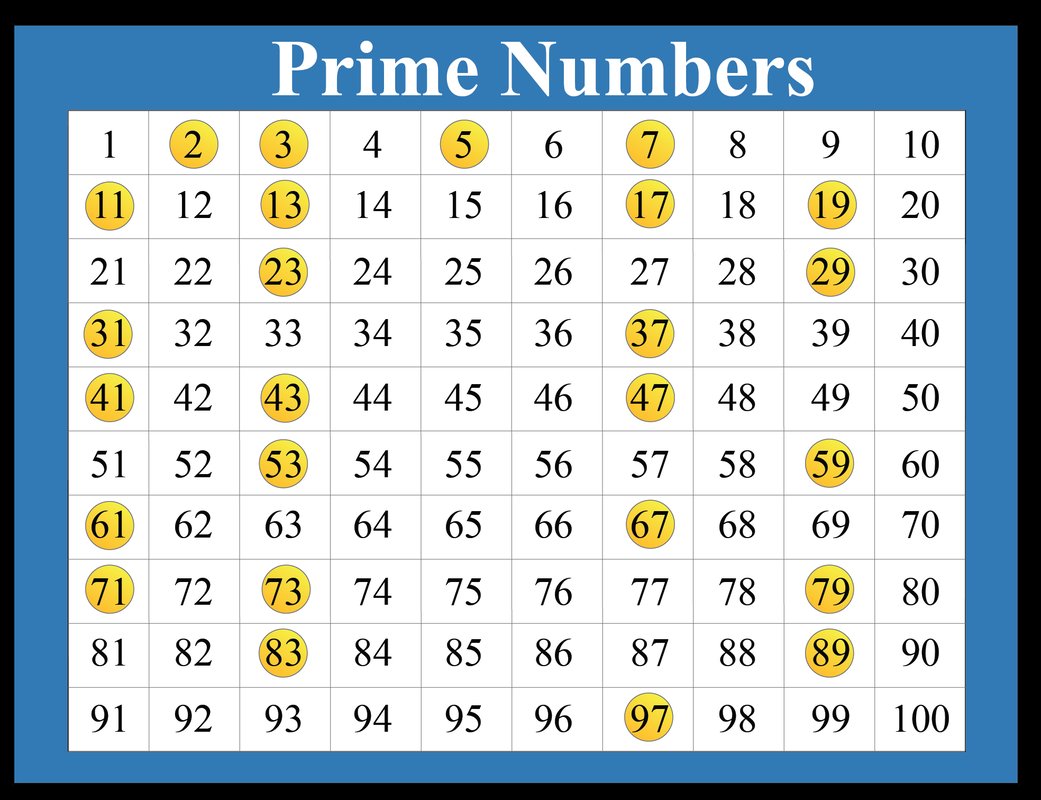

Quick answer: A prime number is a whole number greater than 1 that has exactly two factors: 1 and itself. Examples include 2, 3, 5, 7, 11, 13, and 17. The number 1 is not prime.
A prime number is a whole number greater than 1 that has exactly two factors: 1 and itself. In other words, it can only be divided evenly by 1 and the number itself. A simple prime number definition is any number that cannot be made by multiplying two smaller whole numbers together. I still remember teaching this to a group of students with a prime number chart on the board. Once they saw the pattern, the meaning clicked for most of them.
Prime Number Examples
So what is a prime number in everyday terms? Numbers like 2, 3, 5, 7, 11, and 13 are primes. Is 2 a prime number? Yes, it is the only even prime number because every other even number can be divided by 2. Is 17 a prime number? Yes, because its only factors are 1 and 17.
Is 1 a Prime Number?
No. By definition, 1 has only one factor (itself), so it does not qualify. This is a common trick question. For a deeper reference, see Wikipedia’s prime number article and the Prime Pages at UT Martin, which track prime number records.
How to Check for Primes
A quick way to check is to see if the number has any divisors other than 1 and itself. Once you get used to spotting them, prime numbers become easy to recognize, and you start noticing them in everything from cryptography to simple math puzzles.
Frequently Asked Questions
What is a prime number?
A prime number is a whole number greater than 1 with exactly two factors: 1 and itself. It cannot be made by multiplying two smaller whole numbers.
Is 2 a prime number?
Yes. 2 is the only even prime number, because every other even number can be divided by 2.
Is 1 a prime number?
No. 1 has only one factor (itself), so by definition it does not qualify as prime.
Is 17 a prime number?
Yes. Its only factors are 1 and 17, so it meets the definition of a prime number.
What are prime numbers used for?
Primes are used in cryptography, computer security, and math puzzles, among other areas.






Leave a Reply