

Earning $55 per hour can translate into a strong annual income, but the exact yearly amount depends on your weekly hours and the number of weeks you work. Converting this hourly rate into an annual salary helps with financial planning, job comparisons and budgeting.
This guide provides clear calculations for $55 per hour, different work schedules, tax considerations and practical insights.
Quick answer: $55 an hour is $114,400 a year before tax, based on 40 hours a week for 52 weeks (2,080 paid hours). That equals about $9,533 a month, $4,400 every two weeks, $2,200 a week and $440 for an eight-hour day.
Basic Calculation: $55 Per Hour to Annual Salary
Using the standard full-time schedule of 40 hours per week and 52 weeks per year:
$55 x 40 hours x 52 weeks = $114,400 per year
This is the most commonly referenced annual figure for a $55 hourly wage.
Annual Pay at Different Schedules
| Hours per Week | Weeks per Year | Annual Pay at $55/hr |
|---|---|---|
| 40 | 52 | $114,400 |
| 40 | 50 | $110,000 |
| 35 | 52 | $100,100 |
| 30 | 52 | $85,800 |
| 45 | 52 | $128,700 |
All figures represent gross pay before taxes and deductions.
Monthly and Paycheck Breakdown
For the standard $114,400 annual salary:
- Monthly: approximately $9,533
- Biweekly: approximately $4,400
- Weekly: $2,200
Take-Home Pay Considerations
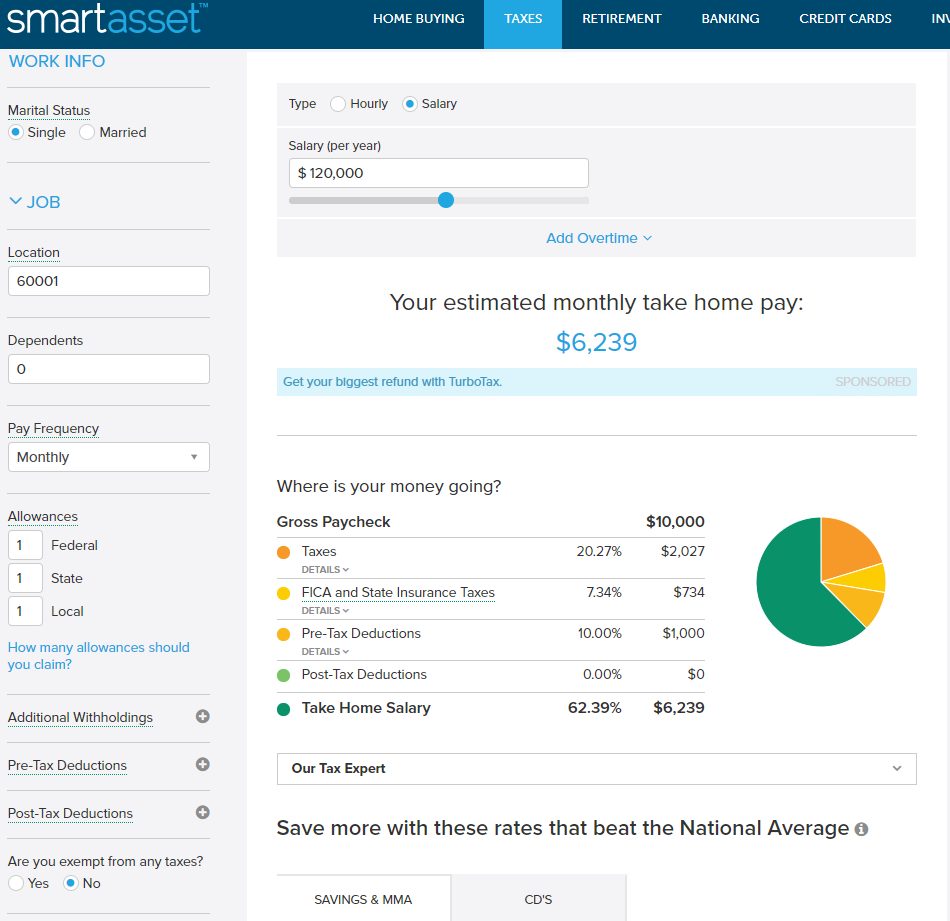
A gross pay of $114,400 is reduced by:
- Federal income tax
- State income tax (where applicable)
- Social Security and Medicare contributions
- Health insurance and other benefits deductions
- Retirement plan contributions
Actual take-home pay varies significantly based on location, filing status and deductions.
Overtime Potential
At time-and-a-half, overtime pay would be $82.50 per hour. Regular overtime can push annual earnings substantially higher than the base $114,400.
Is $55 Per Hour a High Wage?
$55 per hour equals $114,400 per year at full-time hours. This places the income well above the national median in most regions and is considered a strong salary in many industries, particularly in skilled trades, specialized technical roles, consulting and certain professional fields. Cost of living still plays a major role in how far the income stretches.
$55 an Hour: Pay Breakdown by Period

Based on 40 hours a week and 52 paid weeks a year:
| Pay period | Calculation | Gross pay |
|---|---|---|
| Per hour | Base rate | $55 |
| Per day (8 hours) | $55 x 8 | $440 |
| Per week (40 hours) | $55 x 40 | $2,200 |
| Biweekly (26 paychecks) | $2,200 x 2 | $4,400 |
| Semi-monthly (24 paychecks) | $114,400 / 24 | about $4,767 |
| Per month | $114,400 / 12 | about $9,533 |
| Per year | $55 x 2,080 | $114,400 |
The Formula Behind the Numbers
Annual salary = hourly rate x hours per week x paid weeks per year
For $55 an hour: $55 x 40 x 52 = $114,400.
To go the other way and turn a salary into an hourly rate, divide the salary by 2,080 for a standard full-time year. For example, $114,400 / 2,080 = $55.
More Schedules at $55 an Hour
The table earlier in this article covers the most common schedules. Here are some additional ones:
| Weekly hours | Paid weeks | Annual pay |
|---|---|---|
| 37.5 | 52 | $107,250 |
| 32 (four-day week) | 52 | $91,520 |
| 25 | 52 | $71,500 |
| 20 | 52 | $57,200 |
| 40 | 48 | $105,600 |
Part-time work at $55 an hour can still produce a substantial income. A 20-hour week, for example, earns $57,200 a year before tax.
Unpaid Time Off at $55 an Hour
Each unpaid 40-hour week reduces your annual income by $2,200:
| Unpaid weeks | Annual pay |
|---|---|
| 0 | $114,400 |
| 1 | $112,200 |
| 2 | $110,000 |
| 4 | $105,600 |
If your employer offers paid holidays and vacation, your annual pay stays at $114,400.
Overtime at $55 an Hour
For non-exempt employees covered by the US Fair Labor Standards Act, hours over 40 in a workweek must generally be paid at least one and a half times the regular rate. At $55 an hour, that is $82.50 an hour.
| Regular overtime per week | Extra per year | Total yearly pay |
|---|---|---|
| 2 hours | $8,580 | $122,980 |
| 5 hours | $21,450 | $135,850 |
| 10 hours | $42,900 | $157,300 |
Many roles paying $55 an hour are salaried and classed as exempt, which means overtime may not apply. Check your contract and your employment classification.
Which Jobs Pay Around $55 an Hour?
Pay varies widely by employer, location and experience, but roles that can reach this level include experienced software developers, registered nurses in some regions and specialties, engineers, IT consultants, skilled trades with overtime, pharmacists and senior marketing or finance professionals. For reliable figures, check official sources such as the US Bureau of Labor Statistics Occupational Outlook Handbook, which publishes median pay by occupation.
Employee vs Contractor at $55 an Hour
The headline figure means different things depending on how you are paid:
- As an employee, your employer withholds income tax and your share of Social Security and Medicare, pays its own share of payroll taxes, and may add benefits such as health insurance, retirement matching and paid leave.
- As a contractor or freelancer, you pay self-employment tax of 15.3% on net earnings up to the Social Security wage limit, plus your own health insurance, equipment, software and unpaid time off.
A contractor charging $55 an hour often takes home noticeably less than an employee paid the same hourly rate, which is why freelance rates are usually set higher.
What a Raise Looks Like at This Level
Every additional dollar per hour adds $2,080 a year on a full-time schedule:
| Hourly rate | Annual salary |
|---|---|
| $55 | $114,400 |
| $57 | $118,560 |
| $60 | $124,800 |
| $65 | $135,200 |
When negotiating, it can help to express a request both ways. Asking for $60 instead of $55 an hour is a request for an extra $10,400 a year before tax.
Managing a $114,400 Income Well
- Build an emergency fund covering several months of essential expenses.
- Use tax-advantaged retirement accounts, such as a 401(k) or IRA, especially if your employer offers matching contributions.
- Avoid lifestyle creep by increasing savings each time your pay rises.
- Plan for taxes if you are a contractor by setting aside money for quarterly estimated payments.
- Review insurance cover, including health, disability and life insurance, as your income and responsibilities grow.
$55 an Hour in the UK and Elsewhere
Standard working weeks vary by country. Many UK full-time contracts use 37.5 hours a week:
- £55 x 37.5 hours x 52 weeks = £107,250 a year
- £107,250 / 12 = £8,937.50 a month before tax
Use the hours stated in your contract to calculate your own figure accurately.
Common Mistakes When Converting $55 an Hour
- Confusing gross and net pay. $114,400 is the amount before income tax, payroll taxes and deductions. Your take-home pay will be lower.
- Assuming 52 paid weeks. If your role does not include paid holidays or vacation, use the number of weeks you will actually be paid.
- Mixing up biweekly and semi-monthly pay. Biweekly gives 26 paychecks of $4,400, while semi-monthly gives 24 paychecks of about $4,767.
- Ignoring irregular hours. If your weekly hours vary, use an average over several months rather than your best week.
- Comparing job offers on hourly rate alone. A slightly lower rate with strong benefits, such as health insurance and retirement matching, can be worth more overall than a higher rate with none.
- Forgetting business costs as a contractor. Equipment, software, insurance and accounting fees come out of your income before you can call it profit.
Key Takeaways
- $55 per hour equals $114,400 per year at 40 hours per week and 52 weeks.
- Different weekly hours change the annual total significantly.
- Taxes and deductions reduce the amount you actually receive.
- Overtime can increase earnings considerably.
- The real value of the salary depends on location and personal expenses.
- Every extra dollar per hour adds $2,080 a year on a full-time schedule.
- Many roles at this pay level are exempt from overtime, so check your classification.
Frequently Asked Questions
How much is $55 an hour annually?
At 40 hours per week and 52 weeks per year, it equals $114,400 before taxes.
Is $55 an hour good money?
Yes, in most areas it is considered a strong income, though high cost-of-living cities will reduce purchasing power.
How do I convert $55 per hour to monthly pay?
Divide the annual amount by 12. For full-time work, this is approximately $9,533 per month gross.
Does this calculation include benefits?
No. The $114,400 figure is gross wages only. Benefits are additional.
How much is $55 an hour biweekly?
At 40 hours a week, $55 an hour is $2,200 a week, so a biweekly paycheck is $4,400 before tax and deductions. Biweekly pay means 26 paychecks a year, so in two months of the year you receive three paychecks instead of two.
What is $55 an hour for a 37.5-hour week?
At 37.5 hours a week for 52 weeks, you work 1,950 hours a year. Multiplied by $55, that equals $107,250 a year before tax, or $8,937.50 a month. This schedule is common for UK contracts and many office roles.
How much is $55 an hour part time?
At 20 hours a week for 52 weeks, $55 an hour equals $57,200 a year before tax. At 25 hours a week it is $71,500, and at 30 hours it is $85,800. Part-time roles may not include benefits, so factor in insurance and leave.
Is $114,400 a year a six-figure salary?
Yes. $114,400 is above $100,000, so it counts as a six-figure salary. How comfortable it feels depends on location, household size, debts and benefits. In expensive cities, housing and childcare can absorb a large share of even a six-figure income.
How much is $55 an hour per day?
For a standard eight-hour working day, $55 an hour equals $440 before tax. A seven-and-a-half-hour day, common in many office contracts, pays $412.50. If you work longer days, multiply $55 by your actual hours, and remember that overtime rules may raise the rate for extra hours.







Leave a Reply