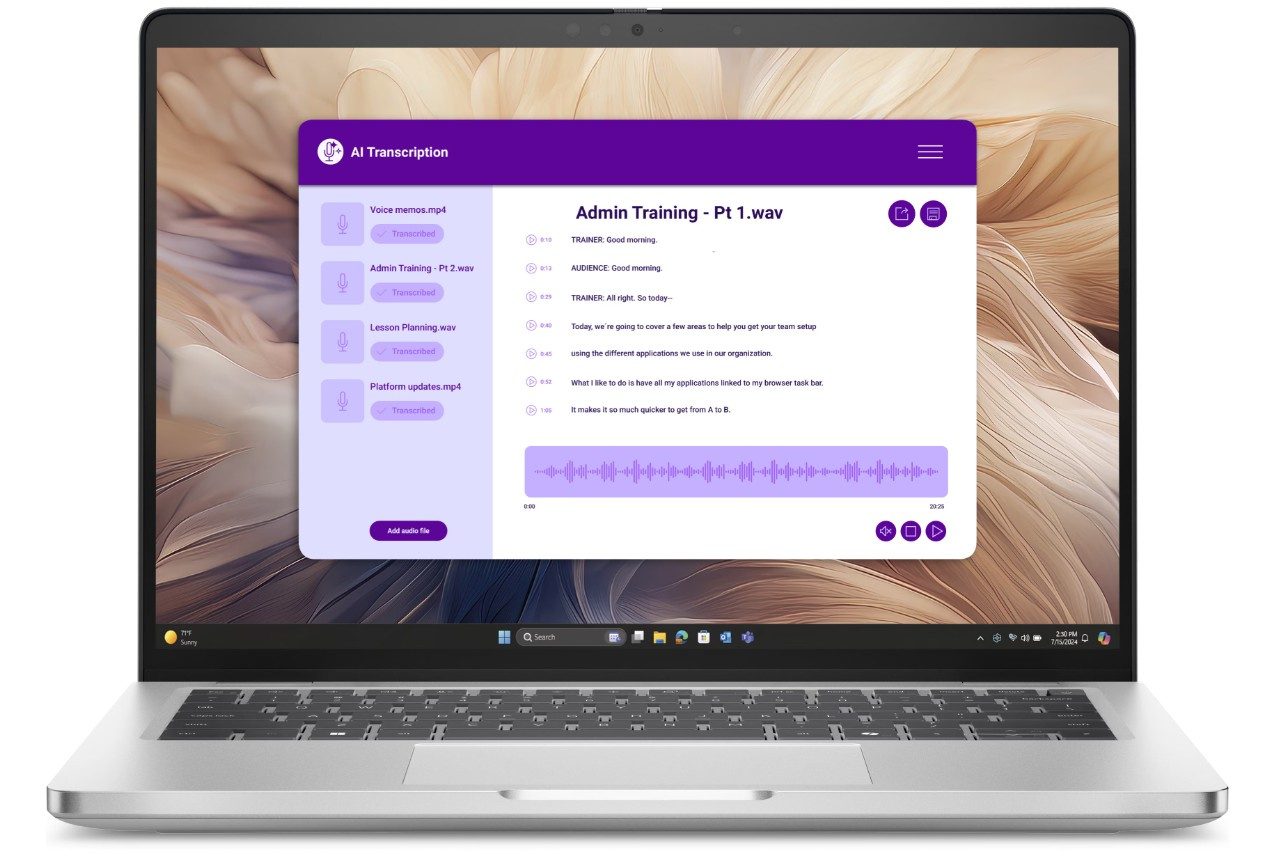

Transcription tools convert spoken audio from meetings, interviews, lectures, and videos into written text. Good transcription software saves hours of manual work and helps create accurate records for study, business, and content creation.
This guide reviews the best transcription tools available in 2026, explains how to choose the right one, and shares tips for higher accuracy. It covers the main keyword 文字起こしツール along with related needs for audio-to-text conversion.
Quick answer: The best transcription tool depends on how you work. For live meetings, use the transcription built into Zoom, Microsoft Teams or Google Meet, or an AI meeting assistant. For uploaded recordings, use an online service with good accuracy in your language, speaker labels and export formats. For privacy or offline use, choose software that runs locally, such as tools based on OpenAI's open-source Whisper model. Always test any tool on your own audio first.
What Are Transcription Tools?
Transcription tools (文字起こしツール) are software or online services that automatically turn speech into text. They use artificial intelligence and speech recognition to process audio or video files and produce editable transcripts.
These tools are widely used by:
- Students
- Journalists
- Business professionals
- Content creators
- Researchers
- Legal and medical teams
Types of Transcription Tools
- Online Transcription Services
Web-based tools where you upload files and receive transcripts. Many offer free trials or limited free minutes.
- Desktop Transcription Software
Programs installed on your computer that process audio locally or through the cloud.
- Mobile Transcription Apps
Apps that record and transcribe directly on smartphones.
- AI-Powered Meeting Assistants
Tools that join online meetings and generate transcripts automatically.
Key Features to Look for in Transcription Tools
- High accuracy across accents and audio quality
- Support for multiple speakers
- Fast processing speed
- Easy editing interface
- Export options (TXT, DOCX, SRT, etc.)
- Timestamping
- Speaker identification
- Reasonable pricing or free tier
How to Get Better Results from Transcription Tools
- Use clear audio with minimal background noise.
- Speak at a moderate pace when recording.
- Use a good microphone for important recordings.
- Break very long files into smaller parts if needed.
- Review and correct the transcript afterward.
- Choose tools that support your primary language well.
- Test free versions before committing to paid plans.
Free vs Paid Transcription Tools
| Feature | Free Tools | Paid Tools |
|---|---|---|
| Accuracy | Moderate | Higher |
| Minutes per month | Limited | Higher or unlimited |
| Speaker detection | Basic or none | Advanced |
| Editing tools | Limited | Full-featured |
| Export formats | Basic | Multiple |
| Priority support | No | Yes |
Common Use Cases
Meetings and Interviews
Generate notes quickly and share accurate records.
Education
Transcribe lectures for study and review.
Content Creation
Turn podcasts or videos into blog posts and show notes.
Accessibility
Create captions and text versions of audio content.
Limitations of Transcription Tools
- Accuracy drops with heavy accents, noise, or overlapping speech
- Technical jargon may be transcribed incorrectly
- Free tools often have strict limits
- Manual correction is still required for professional use
- Some tools struggle with multiple languages in one file
Transcription Tool Categories at a Glance
| Category | Examples | Best for | Main trade-off |
|---|---|---|---|
| Built-in meeting transcription | Zoom, Microsoft Teams, Google Meet (on eligible plans) | Online meetings | Tied to one platform and plan |
| AI meeting assistants | Otter.ai, Notta, Fireflies.ai | Automatic notes, summaries and action items | Bots joining meetings may concern participants |
| Upload-based online services | Many web transcription services | Interviews, podcasts, lectures | Audio is processed in the cloud |
| Office suite features | Microsoft Word's Transcribe feature, Google Docs voice typing | Occasional use within familiar apps | Fewer features, usage limits |
| Local or open-source software | Desktop apps built on OpenAI Whisper | Privacy, offline use, technical users | Needs a capable computer and some setup |
| Phone apps | Google Recorder on Pixel, other recorder apps | Recording and transcribing on the go | Device-specific features |
| Human transcription services | Professional transcription agencies | Legal, medical and research work needing very high accuracy | Higher cost and longer turnaround |
Tools and features change often, so treat names as examples and check current details on each provider's website.
How to Choose a Transcription Tool: Decision Guide

Answer these questions to narrow your options:
- Where does the audio come from? Live meetings point to meeting tools; existing files point to upload-based or local software.
- Which language, and are there mixed languages? Accuracy varies widely by language. For Japanese and other non-English audio, test tools specifically with that language.
- How many speakers? If more than one person speaks, you need reliable speaker identification.
- How sensitive is the content? Confidential, medical or legal recordings may require local processing or a provider with strong security commitments.
- How much audio each month? Light users can often rely on free tiers; heavy users should compare paid plans on cost per hour.
- What output do you need? Plain text, Word documents, subtitles (SRT or VTT), timestamps or summaries.
- Who will edit the transcript? A good editor that links text to audio saves a lot of correction time.
How to Test Tools Before Choosing
A fair trial takes less than an hour:
- Pick a short sample of real audio, around five minutes, that represents your typical recordings.
- Run the same file through two or three tools.
- Count obvious errors in names, numbers and technical terms.
- Check whether speakers are separated correctly.
- Time how long it takes to correct each transcript.
- Try exporting in the format you need.
- Read the privacy terms for each tool.
The best tool is usually the one that needs the least editing for your type of audio, not the one with the longest feature list.
Understanding Pricing Models
Without quoting specific prices, which change frequently, transcription tools commonly use these models:
- Free tier: a limited number of minutes, shorter file limits or fewer features.
- Monthly subscription: a set number of hours or unlimited use for a fixed fee.
- Pay as you go: you pay per minute or per hour of audio.
- Per-seat business plans: pricing per user with admin controls and security features.
- Human transcription: usually charged per audio minute, with higher rates for faster turnaround or difficult audio.
Calculate your typical monthly hours and compare the true cost of each plan for that volume.
Features That Matter Most for Different Users
| User | Most important features |
|---|---|
| Students | Lecture recording, free minutes, searchable transcripts, summaries |
| Journalists | Accuracy on names, timestamps, fast turnaround, secure storage |
| Researchers | Speaker labels, verbatim options, export to analysis software, data protection |
| Content creators | Subtitle exports, editing linked to audio, multiple languages |
| Businesses | Meeting integrations, admin controls, security certifications, summaries and action items |
| Legal and medical | Very high accuracy, confidentiality, human review options |
Transcription Tool Checklist
- Accuracy tested on your own audio
- Supports your languages and accents
- Speaker identification
- Timestamps
- Custom vocabulary for names and jargon, if available
- Export formats you need
- Clear data retention and deletion options
- Reasonable cost for your monthly volume
- Easy editing and sharing
Mistakes to Avoid When Choosing
- Choosing a tool based only on its marketing claims about accuracy
- Ignoring language support for non-English recordings
- Uploading confidential audio without reading the privacy policy
- Paying for an annual plan before testing the monthly or free version
- Forgetting that all automatic transcripts still need proofreading
Example: Matching a Tool to a Real Need
A small marketing team records weekly client calls on Zoom and also interviews customers for case studies. Their needs suggest two solutions rather than one:
- For weekly calls: the meeting platform's own transcription, or a meeting assistant that produces summaries and action points automatically.
- For case study interviews: an upload-based service with strong speaker labels and an editor linked to the audio, so quotes can be checked word for word before publishing.
Many people find that combining a meeting tool with a file transcription tool works better than forcing one tool to do everything.
Key Takeaways
- Transcription tools (文字起こしツール) save significant time when converting audio to text.
- Audio quality is the biggest factor in accuracy.
- Both free and paid options are available depending on your needs.
- Always review and edit important transcripts.
- Choose tools based on language support, accuracy, and export features.
- Choose by audio source, language, number of speakers, privacy needs and monthly volume.
- Test two or three tools on the same real recording and pick the one that needs the least editing.
Frequently Asked Questions
What is the best transcription tool?
The best tool depends on your language, audio quality, and volume of work. Testing a few options with your own recordings is recommended.
Are free transcription tools accurate enough?
They work well for clear audio and personal use. Professional or high-volume needs usually benefit from paid tools.
Can transcription tools identify different speakers?
Many paid tools offer speaker identification. Free tools often have limited or no speaker separation.
How long does transcription take?
Most modern tools process audio faster than real time. A one-hour recording often finishes in a few minutes.
Which transcription tool is most accurate?
No single tool is the most accurate for everyone. Accuracy depends on your language, accents, audio quality and subject matter. The most reliable way to choose is to test the same five-minute recording in two or three tools and compare how many corrections each transcript needs before it is usable.
Are there transcription tools that work offline?
Yes. Some desktop apps run speech recognition locally, many based on OpenAI's open-source Whisper model, so audio never leaves your computer. Google Recorder on Pixel phones also transcribes on the device. Offline tools suit confidential recordings but may need a more powerful computer for long files.
Can transcription tools handle Japanese audio?
Many modern tools support Japanese, but accuracy varies more than for English, particularly with names, mixed Japanese and English speech, and casual conversation. Test tools with your own Japanese recordings, check punctuation and kanji conversion, and choose a tool that allows easy editing.
What export formats should a transcription tool offer?
Common useful formats are TXT for plain text, DOCX for Word documents and SRT or VTT for subtitles. Researchers may need timestamps and speaker labels in exports, and some tools offer PDF or direct export to Google Docs. Check the format you need before committing to a tool.









Leave a Reply