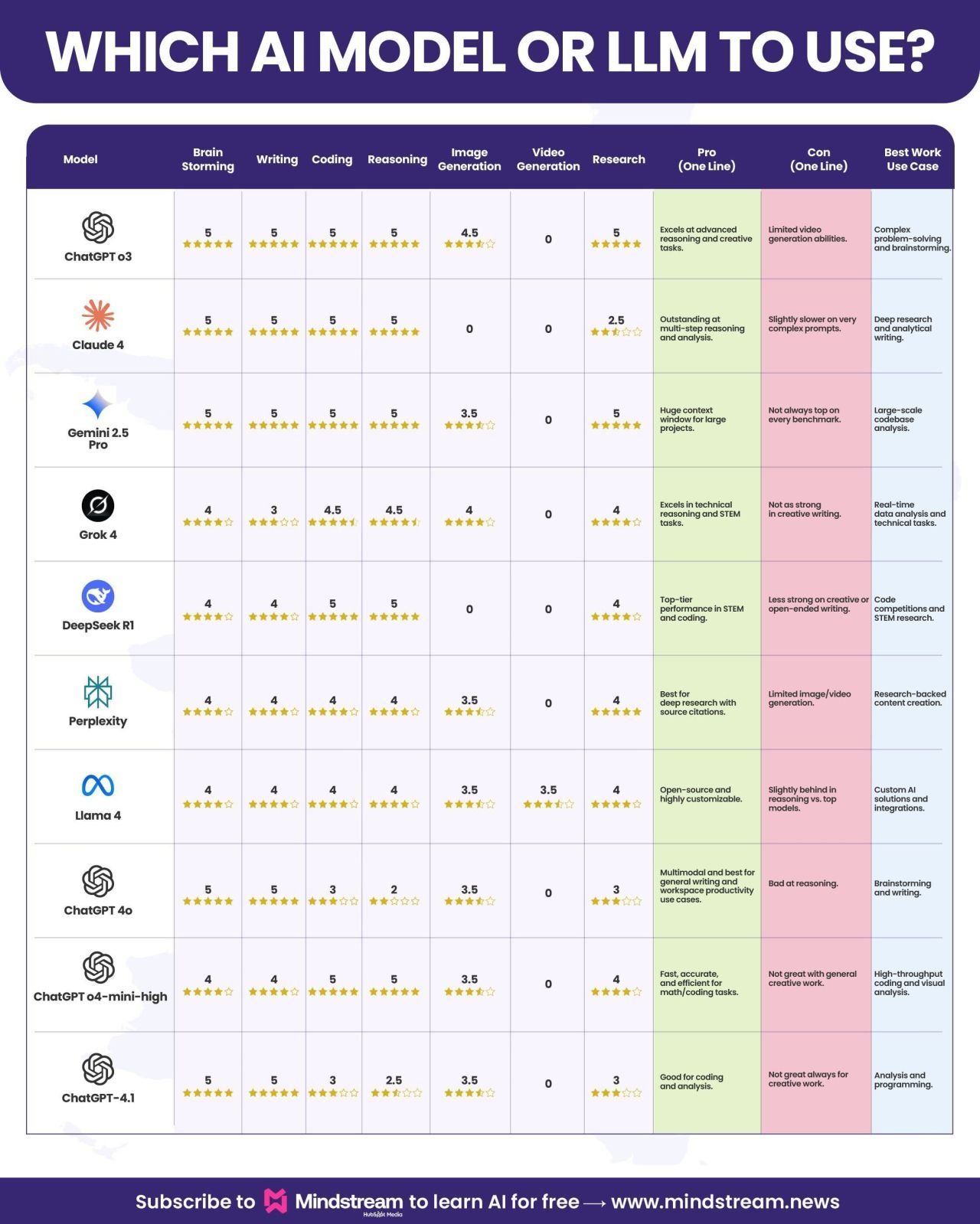

An LLM leaderboard is a public ranking that compares large language models based on performance across various tests. These rankings help researchers, developers, and businesses understand which models perform better on tasks such as reasoning, coding, mathematics, and general knowledge. Leaderboards are updated as new models are released.
This guide explains what LLM leaderboards are, how rankings are created, the major platforms available, their limitations, and how to use them effectively when choosing a model.
What Is an LLM Leaderboard?
An LLM leaderboard ranks large language models using standardised benchmarks or human evaluations. The goal is to provide a relatively objective way to compare model capabilities. Different leaderboards focus on different strengths, so rankings can vary between platforms.
Common evaluation areas include:
- General reasoning and knowledge
- Coding and software tasks
- Mathematical problem solving
- Instruction following
- Multilingual ability
- Safety and factual accuracy
Why LLM Leaderboards Matter
LLM leaderboards serve several important purposes:
- They help developers choose the right model for a project
- Researchers use them to track progress in the field
- Companies rely on them when selecting models for commercial use
- They create transparency in a fast-moving industry
Without leaderboards, it would be difficult to compare models fairly.
Major LLM Leaderboards in 2026
LMSYS Chatbot Arena
Uses blind human voting. Users compare two model responses and choose the better one. Rankings are based on an Elo-style system.
Open LLM Leaderboard (Hugging Face)
Focuses mainly on open-source models and evaluates them on academic benchmarks such as MMLU, GSM8K and HumanEval.
Artificial Analysis
Provides independent testing that often includes quality, speed, and cost considerations.
Berkeley Function-Calling Leaderboard
Specialises in measuring how well models handle tool use and function calling.
Specialised Leaderboards
Additional rankings exist for coding performance (such as LiveCodeBench), function calling, mathematics, and other specific capabilities.
How Rankings Are Calculated
Leaderboards use different methods:
- Human preference comparisons
- Automated benchmark scores, including academic benchmarks such as MMLU, GPQA and MATH
- Task-specific evaluations
- Real-world task performance
- Combination of quality and efficiency metrics
Because methods differ, a model that ranks highly on one leaderboard may place lower on another.
How to Read LLM Leaderboards Correctly
- Check the date of the latest update
- Review which benchmarks or methods are used
- Consider whether models are open-source or closed
- Look at performance on tasks relevant to your needs
- Note model size, speed, and cost when available
- Remember that benchmark scores do not always predict real-world results
Using multiple leaderboards together gives a clearer picture than relying on a single ranking.
Limitations of LLM Leaderboards
- Benchmarks can be overfitted by model developers
- Human preferences may favour style over accuracy
- Some test data may have been seen during training
- Rankings change quickly with new releases
- Real-world usefulness depends on factors beyond scores
- Cost, latency, and reliability are not always fully reflected
These limitations mean leaderboards should be treated as useful references rather than final answers.
Practical Advice for Choosing a Model
- Identify the main tasks you need the model to perform
- Review at least two different leaderboards
- Test shortlisted models with your own examples
- Consider speed, cost, and data privacy requirements
- Re-check rankings periodically as the field moves quickly
- Review safety and refusal behaviour if needed
Key Takeaways
- LLM leaderboards rank large language models using benchmarks and human evaluations
- Popular platforms include LMSYS Chatbot Arena and the Hugging Face Open LLM Leaderboard
- Different leaderboards can produce different rankings
- Benchmark performance does not guarantee real-world success
- Multiple sources and personal testing provide the best guidance
Frequently Asked Questions
Which LLM leaderboard is the most accurate?
No single leaderboard is perfect. LMSYS Chatbot Arena is widely respected for human preference data, while academic leaderboards are useful for specific skills. Checking more than one is recommended.
Do higher-ranked models always work better?
Not necessarily. A model that scores well on benchmarks may still underperform on specialised tasks, or it may be slower or more expensive than alternatives.
How often do LLM leaderboards change?
Rankings can shift frequently, sometimes within days or weeks, as new models are released and evaluated.
Should businesses rely only on leaderboards?
No. Leaderboards are a starting point. Real testing with actual use cases, along with considerations of cost and reliability, is essential.









Leave a Reply